

11
THIS MAN
IS An
Not because he’s a genius (though he might be.)
Not his Ivy League degree.
Not his Everest altitude talent.
Not his HR-approved EQ.
Not his mammoth set of superskills.
Because he’s raising his hand.
The sheer intensity of his curiosity. How radically his ego is checked at the door.
He’s about to say something everyone else is thinking.
Or that no one is.
His appetite for truth is never satisfied.
He is a man of gravity.
Eleven is a mentality, not a destination.
A mode you enter under pressure, not a crown you wear.
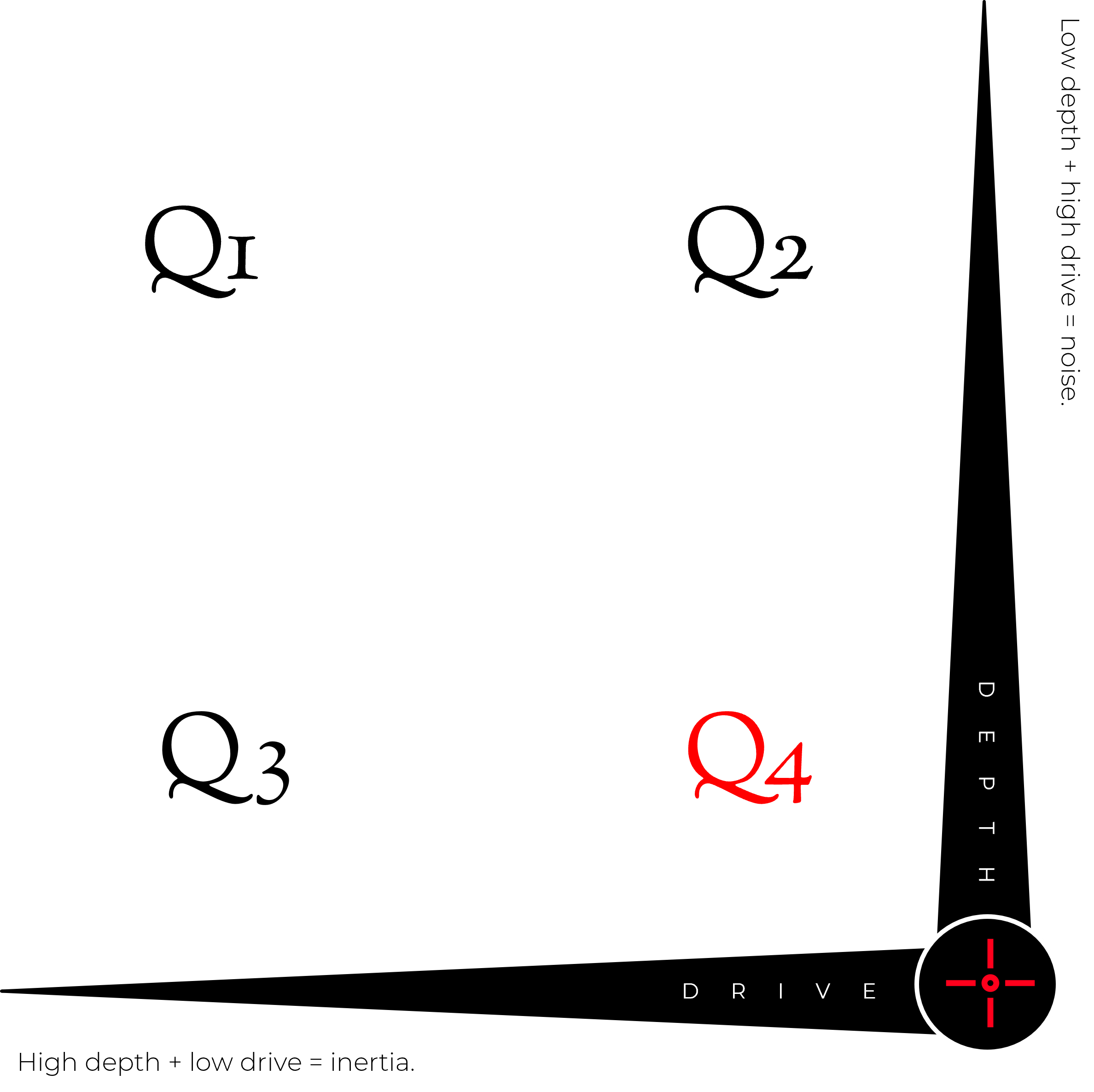
Pressure reveals reflexes. We mapped them.
Only one
quadrant is built for ELEVEN.
-
Q1 SIGNS.
Obey the playbook. Hit the checklist. Nod in the meeting. Wait the storm out. Lead yesterday’s version of the company, not the next one. Competence mimics confidence until pressure hits. Steady on the surface, irrelevant in the deep.
Q1
Buttoned up, on plan, on script, no pulse.
-
Q2 SIGNS.
Convincing. Out ahead. Fast-twitch thinkers. Speak before sensing, solve before seeing. Adrenaline feeds the metrics. Pressure speeds them up instead of slowing them down. Curiosity gets lost in execution. On target. Out of touch.
Q2
Agents of speed & scale, lose relevance.
-
Q3 SIGNS
Perceptive. Attuned. Insightful. See big—but play too small. Sharp insights. Low ignition. Direction feels just out of reach. Knows what’s off—or on—but won’t name it, risk it, or move first. Stuck in “almost ready.” Drown in the deep.
Q3
See reality, sense the signal, stall out.
-
Q4 SIGNS.
Blaze and build. Acutely perceptive. Immune to cliques. Shift rooms, reframe reality. Create storms without chaos. Hunt truth without fear or agenda. Curiosity wrecks what ego protects.
Q4
Drive + depth = fiercely relevant.




1. Play big, stay small.
What breaks.
Most people think confidence comes from experience, talent, belief. It doesn’t. At least not under pressure.
In the moment, our nervous system skips the résumé. It runs the wiring. And if that wiring is wrong—if it’s fed by ego or built on past success—you don’t rise. You lock up.
What ELEVEN buildS.
We tested it. In a competitive, high-pressure task, people primed with humility outperformed those primed with confidence by 17%. Why? Because humility doesn’t fake certainty. It stays responsive. Ego gets ejected. Insecurity fades.
Old confidence models say competence feeds confidence: get good, get confident.
If that were true, the most experienced people would be the most unshakable. They’re not.
Confidence built on past success collapses when the future stops matching it.
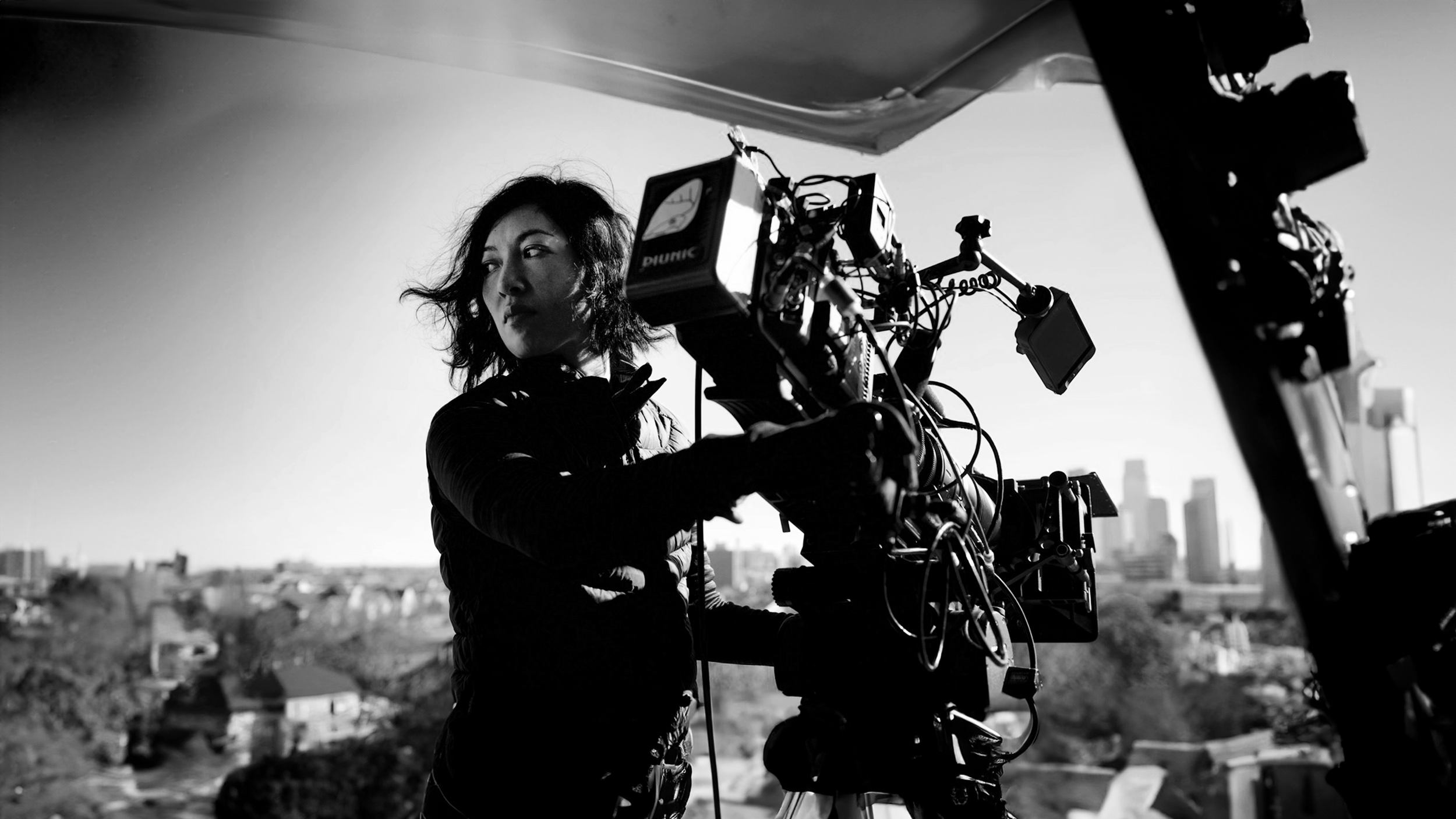
Watch the competitive power of play big, stay small.

Let’s see if it fits in 15 mins. No pitch.



2. Wake the incurious, See the invisible.
What breaks.
Most leaders think they’re reading the room. They’re actually projecting onto it.
They don’t notice the shift. They just feel certain. And certainty sells. Especially under pressure.
But pressure distorts input. In one study, something as small as the texture of a chair changed how people judged power and trust without even realizing it.
The brain doesn’t report distortion. It reports clarity.
And familiarity makes it worse. The more you “know” someone, the more confident your read, the more wrong you tend to be.
In our data set—8,000+ participants—most organizations reward answers, not questions. And when expertise outranks curiosity, the smartest people in the room go blind first.
What ELEVEN builds.
Law Two builds pattern interrupters. People who notice the drop, the dodge, the word that was almost said or no one questions.
People who don’t get unnerved by ambiguity. They hold it. And when they speak, they don’t clean it up. They expose the fault line.
This isn’t just curiosity-as-virtue. It’s undivided attention that holds under pressure.
The skill isn’t asking more questions. It’s asking the one question that breaks the script.

The intensity of curiosity in our culture is: *From our 8,374 person, 477 team culture and chemistry survey.



3. Seed hurricanes, hunt for truth.
What breaks.
Most rooms are built to avoid storms.
People lock in on a POV. Agree too fast. Protect. Friction gets labeled dysfunction. Curiosity gets filtered for tone. Approval becomes the goal. And when everyone’s nodding, no one’s leading.
Smart people shut down the truth by accident because the more intelligent we are, the more polished our version of it is.
We don’t even know we’re resisting. We just say things like: “Let’s take that offline.” “It’s not the right forum.” “Can we reframe this later?”
Creative friction dies. Real insight never enters the room.
What ELEVEN builds.
Law Three builds truth-seekers under tension.
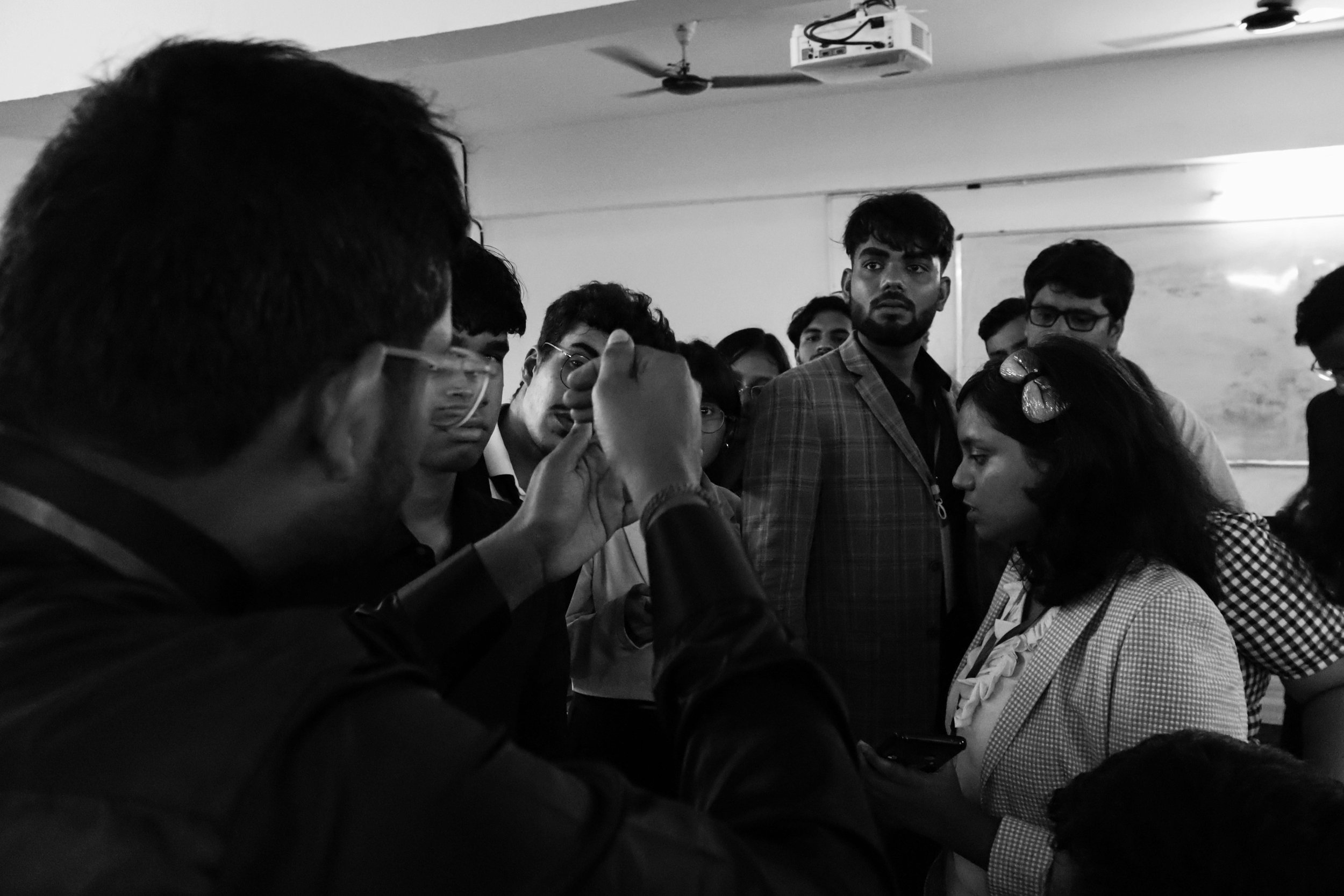
The ones who know how to use tension, not just tolerate it. They agitate things a little on the hunt for a signal, not because of ego.
They listen past the surface. They ask the question no one else will touch. They don’t spin. They pull.
And when the room gets tight they don’t back off, because they know the truth isn’t discovered gently.
You have to jolt it in.

If someone goes a little against the grain to get to the “truth,” they get: *From our 8,374 person, 477 team culture and chemistry survey.

No open enrollments.
Same crew, same company, same work.
No spectators. No ice breakers.
Bring your real
work.
Deals, decks, site, strategy, pitches. Not to polish or rehearse it.
To dig underneath it. The concepts, the input, the ideology.
The assumptions we prop up with speed and execution instead of curiosity.
The truth we keep stepping around because harmony feels safer than finding out we’re wrong.
The needs buried so far below the data that only the perceptive ones pick up on it.
We go in just far enough to disturb what’s actually there.
What matters, what interferes. What’s alive, what just exists.
Until the gap between decent and dead-on isn’t subtle anymore.
It’s clear.
real work, real questions,
real progress.

Deeper gravity, faster
impact.
Clients improve the way they work at twice the speed of typical training. That’s because Eleven starts at the root of behavior: mentality.
How much better everyone gets at dialogue and debate, creative thinking, climbing steep learning curves, opening minds, solving wicked problems, etc.
effective
37%>
Culture growth clients report.
immediately.
120
Months in research, writing and building labs.
4.78/5
Rating of hard raters and smart skeptics.
14&50
Languages and countries published.
231K
People taught across the world, ballpark.
8,000/200
People surveyed/interviewed in our study.
microsoft lockheed sekisui house accor hotels boston scientific kla baptist healthcare bny mellon halliburton adobe logitech
microsoft lockheed sekisui house accor hotels boston scientific kla baptist healthcare bny mellon halliburton adobe logitech
Breakdowns have a shape. So do
breakthroughs.
This happens when gravity meets reality.
Spaced out.
Space Project | Silicon Valley| Q3
A $1.2B satellite on the line. Jon was 25. First job. He broke the silence, questioned the model, didn’t back down. His fix saved $200 million. What he really changed? The way the rocket scientists think about science.
Big five, big table, big pitch.
CTO War Room | Q4
A Big Five firm brought a tech stack, three platforms, and an 80-slide deck. Someone on the client side finally said, “This solves for scale. It doesn’t solve for us.” Silence. No more deck. The room rebuilt itself in real time, whiteboard only.
Unfounded.
Founder Offsite | Brooklyn | Q1
One founder walked in with a corporate identity crisis disguised as a roadmap. She walked out having dismantled her pitch, realigned her board, and rewritten the story her team was afraid to say out loud.